Love shouldn't hurt!
What Is Domestic Abuse?

Domestic abuse, also called "domestic violence" or "intimate partner violence", can be defined as a pattern of behavior in any relationship that is used to gain or maintain power and control over an intimate partner. Abuse is physical, sexual, emotional, economic or psychological actions or threats of actions that influence another person. This includes any behaviour that frighten, intimidate, terrorize, manipulate, hurt, humiliate, blame, injure, or wound someone. Domestic abuse can happen to anyone of any race, age, sexual orientation, religion, or gender. It can occur within a range of relationships including couples who are married, living together or dating. Domestic violence affects people of all socioeconomic backgrounds and education levels.
Anyone can be a victim of domestic violence, regardless of age, race, gender, sexual orientation, faith or class
Recognizing the signs of domestic abuse
Does your partner…
- Embarrass or make fun of you in front of your friends or family?
- Put down your accomplishments?
- Make you feel like you are unable to make decisions?
- Use intimidation or threats to gain compliance?
- Tell you that you are nothing without them?
- Treat you roughly—grab, push, pinch, shove or hit you?
- Call you several times a night or show up to make sure you are where you said you would be?
- Use drugs or alcohol as an excuse for saying hurtful things or abusing you?
- Blame you for how they feel or act?
- Pressure you sexually for things you aren’t ready for?
- Make you feel like there is “no way out” of the relationship?
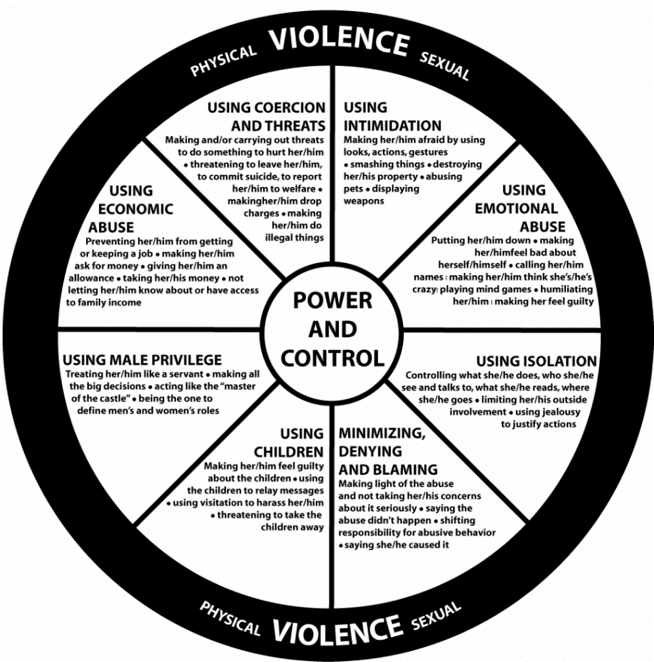

The Power & Control wheel is a particularly helpful tool in understanding the overall pattern of abusive and violent behaviour, which are used by an abuser to establish and maintain control over his/her partner or any other victim in the household. Very often, one or more violent incidents may be accompanied by an array of these other types of abuse. They are less easily identified, yet firmly establish a pattern of intimidation and control in the relationship.
Emotional abuse includes undermining a person's sense of self-worth through constant criticism; belittling one's abilities; name-calling or other verbal abuse; damaging a partner's relationship with the children; or not letting a partner see friends and family. You may be in an emotionally abusive relationship if your partner:
- Calls you names, insults you or continually criticizes you.
- Does not trust you and acts in a jealous or possessive manner.
- Tries to isolate you from family or friends.
- Monitors where you go, whom you call and with whom you spend your time.
- Does not want you to work.
- Controls finances or refuses to share money.
- Punishes you by withholding affection.
Psychological abuse: involves causing fear by intimidation; threatening physical harm to self, partner or children; destruction of pets and property; “mind games”; or forcing isolation from friends, family, school and/or work.
Financial or economic abuse: involves making or attempting to make a person financially dependent by maintaining total control over financial resources, withholding access to money, and/or forbidding attendance at school or employment.
Physical abuse: involves hurting or trying to hurt a partner by hitting, kicking, burning, grabbing, pinching, shoving, slapping, hair-pulling, biting, denying medical care or forcing alcohol and/or drug use, or using other physical force. You may be in a physically abusive relationship if your partner:
- Damages property when angry (throws objects, punches walls, kicks doors, etc.).
- Pushes, slaps, bites, kicks or chokes you.
- Abandons you in a dangerous or unfamiliar place.
- Scares you by driving recklessly.
- Uses a weapon to threaten or hurt you.
- Forces you to leave your home.
- Traps you in your home or keeps you from leaving.
Abusive behavior is a choice
Despite what many people believe, domestic violence and abuse does not take place because an abuser loses control over their behavior. In fact, abusive behavior and violence is a deliberate choice to gain control. Perpetrators use a variety of tactics to manipulate you and exert their power, including:
Dominance. Abusive individuals need to feel in charge of the relationship. They may make decisions for you and the family, tell you what to do, and expect you to obey without question. Your abuser may treat you like a servant, child, or even as their possession.
Humiliation. An abuser will do everything they can to lower your self-esteem or make you feel defective in some way. After all, if you believe you’re worthless and that no one else will want you, you’re less likely to leave. Insults, name-calling, shaming, and public put-downs are all weapons of abuse designed to erode your self-worth and make you feel powerless.
Isolation. In order to increase your dependence on them, an abusive partner will cut you off from the outside world. They may keep you from seeing family or friends, or even prevent you from going to work or school.
The cycle of violence in domestic abuse
Domestic abuse falls into a common pattern or cycle of violence:
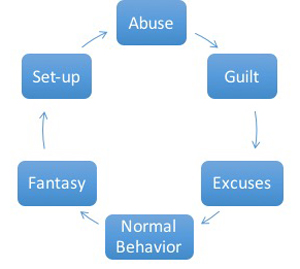
Abuse – Your abusive partner lashes out with aggressive, belittling, or violent behavior. This treatment is a power play designed to show you “who is boss.”
Guilt – Your partner feels guilt after abusing you, but not because of their actions. They’re more worried about the possibility of being caught and facing consequences for their abusive behavior.
Excuses – Your abuser rationalizes what they have done. The person may come up with a string of excuses or blame you for provoking them—anything to avoid taking responsibility.
“Normal” behavior – Your partner does everything in their power to regain control and ensure that you’ll stay in the relationship. A perpetrator may act as if nothing has happened, or they might “turn on the charm.” This peaceful honeymoon phase may give you hope that the abuser has really changed this time.
Fantasy and planning – Your abuser begins to fantasize about repeating the abuse. They spend a lot of time thinking about what you’ve done wrong and how they’ll make you pay for it. Then they form a plan for turning the fantasy of abuse into reality.
Set-up – Your abuser sets you up and puts their plan in motion, creating a situation where they can justify abusing you.
For Survivors
- No one deserves to be abused. The abuse is not your fault. You are not alone.
- Contact the Critical Incident Stress Management Unit (CISMU) if you are concerned that you may be experiencing any form of abuse or are in fear for the safety of yourself or your children.
- If English is not your first language, you can request a language you feel more comfortable speaking when contacting CISMU to provide support.
- You can also see Support Organizations to identify and contact an appropriate resource for your assistance (for both US and International).
- Read how you can protect your digital privacy.
For Concerned Staff - How Can You Help?
How you can help victims of domestic abuse?
- Listen and believe the abused person to let them know they are not alone.
- Encourage her/him seek support through a confidential hotline to connect with a professional in the field.
- Express concern for him/her, show support, and offer referrals to available resources.
- If you have not been directly approached but have reason to believe that a colleague may be in an abusive relationship, consult with your Organization’s Counselling or Ombudsman’s Office >
“At any given moment you have the power to say this is not how the story is going to end.”
Comments
Post a Comment